

Screenshot

Screenshot
EMAIL me at: Bob@BChrismas.com


Join Detective Jack Bondar and Dani Taylor on their continued journey to find her little sister Ali, abducted at 16 and missing for the past 14 years. This sequel to The River of Tears delves into the psyche of sex traffickers and their victims. It explores their internal and external conflicts and the trauma that trafficked people and their families endure. It also shows the post-traumatic stress that many police officers experience in their work. It is a story about our roots, and the way we all long at some point to come home.
This sequel to The River of Tears continues the story of Dani Taylor and Detective Jack Bondar and their search for Dani’s trafficked sister Ali. The novel explores the trauma of the families of missing loved ones and the broad range of people working to counter trafficking and sexual exploitation of Indigenous women in North America. Young Indigenous women that are missing, trafficked, and murdered in Canada and the U.S. illustrate the prevalence of sexual exploitation, human trafficking, and violence directed against Indigenous women. Dani and Jack’s pain, caring, and compassion is evident throughout their search for Ali in the hope they will find her. The story illustrates the human dignity of family members, survivors, and those working to stop the violence. The novel points out that families and those working to counter trafficking suffer from trauma and like the survivors need to heal.
Dr. Sean Byrne, Professor of Peace and Conflict Studies, University of Manitoba
***
As an effective story-teller, Dr. Chrismas sheds light on the tension between the vulnerable and police in Canada while tackling the complicated, harsh and shameful reality of human sex trafficking in Canada. Dr. Chrismas gives us a glimpse into a world where human rights abuses occur daily and locally. Prevention can only occur if we know what this world looks like.
Cathy Peters. Anti-human trafficking prevention educator beamazingcampaign.org
***
Dr. Robert Chrismas continues to take real life experiences and adapt them into accurate and thoughtful fictional portrayals of human sex trafficking in Canada. This novel provides a portrayal into the hidden and unknown sex trafficking that has taken place in our shipping and ports entering and exiting Canada. Chrismas should be applauded for brining attention to this uncomfortable reality.
Dr. Susan McIntyre President The Hindsight Group
Over 30 years experience as an internationally recognized expert, research and policy advisor in sexual abuse and child sexual exploitation.
***
In this evocative and important story, Dr. Bob Chrismas reminds us that the violent, misogynist world of human trafficking is not a distant problem. It is happening everywhere, all around us. The author knows this world—he has spent his career fighting it. Dreamcatcher is a story about the everyday heroes who are battling human trafficking. The story highlights the agency of those working for positive change, both inside and outside the industry.
Dr. Amber Fletcher, Ph.D.
Associate Professor, Department of Sociology & Social Studies
Academic Director, Community Engagement and Research Centre (CERC)
University of Regina, Saskatchewan, Canada, (she/her)
I am thrilled and proud to present my first novel, The River of Tears. It started in lock-down, quarantined with Covid; for a few days I wasn’t sure I would make it out. Part of my heart and soul went into this story, with the hope that some social good comes of it. Please distribute widely and read. I look forward to everyone’s impressions and feedback.


Human history is replete with the horrors of social injustice and the valiant efforts of empathetic and courageous individuals to illuminate those injustices, heal wounds, and show the human family healthy ways to coexist in an equitable society. We have learned some lessons, but sadly, we continue to repeat painful mistakes that tear at the heart of civil society. We are at a critical juncture as we examine the social reckoning which has gripped the world in the aftermath of the killing of George Floyd and the divide which has developed between police and community.
Within the Canadian context, we are also reeling from the ongoing cultural atrocities committed against Indigenous peoples and the exposing and reawakening of deep wounds that must be attended to with integrity. Whether justified or not, police find themselves at the epicenter of these monumental social crises. The police have historically been the blunt instrument used to ensure the marginalized remained within socially constructed boundaries. We must take time to examine and understand these dynamics. We must allow ourselves to feel the historic pain which reverberates presently. We must tend to it with a view to our shared futures. We all have a part to play.
In his novel, The River of Tears, Bob Chrismas, takes us on an intimate journey into the struggle for understanding by connecting us to the historic and ongoing tragedy impacting Indigenous peoples in Canada and the strained relationship with police. He seeks not to blame, but to create awareness, which is foundational to the progress of real reconciliation and a better future for all Canadians. As a serving police officer, Bob paints an honest and compelling portrayal of the relationship between police and Indigenous peoples in Canada and points us to reconciliation. The social principles flowing through The River of Tears are much the same as those that led me into policing over three decades ago. Those same principles led to the intersecting of my life with Bob Chrismas.
In 1987, at the age of twenty-three, I joined the Winnipeg Police Service, driven by a strong desire to impact social change. I didn’t like the way relationships between people of colour and police were often portrayed in popular media at the time. It didn’t take long for me to see the parallel between people who looked like me and the lives of Indigenous people in Winnipeg. The relationship between police and Indigenous peoples closely mirrored what I saw on television respecting the relationship between police and black people. It was defined by negativity.
In my heart, I believed that policing could be an incredible tool for bridging the gap between social and cultural groups. I felt that we could break the established stereotypes resulting in destructive marginalization of many groups. As a rookie officer I experienced first-hand the societal dynamics that led to what I often saw on television. I saw how stereotypes were developed, reinforced, and institutionalized to the detriment of many. I saw the power entrusted to those with the uniform and the potential to reframe the narrative.
I can’t recall the exact time I first met Bob Chrismas, but I do recall that I immediately knew he was different. He was more cerebral than most and carried a kind, gentle, caring spirit on his exterior. Not your typical police officer who was expected to be visibly impermeable to emotion. Perfect in my estimate of what a police officer should be. Bob was fully aware, quietly determined, with the requisite intellectual skills to execute on a greater mission. This was a police officer who was changing the narrative.
As the years and our careers progressed, I was constantly aware of Bob from a distance. We never worked in the same unit, but I recalled the many times Bob was brought up in conversations about progressive police officers. His efforts on behalf of those being sexually exploited was the embodiment of the power and positive influence that policing could bring to bear in improving our collective human condition.
Bob was also one of the first police officers I knew who placed a high value on continuing education when most of us were satisfied with the training and development from within our respective organizations. Bob and I often spoke of his studies, and I would share my desire to further my studies as well. I encouraged Bob. He inspired me. As I rose through the ranks of the Winnipeg Police Service and found myself sitting in the role of Chief of Police in 2012, I harkened back to the desire that took me into policing in 1987.
Having strived towards it for twenty-five years, I now had a real opportunity to make meaningful change. I sought an architect to help us articulate this social impact message. I must thank then Deputy Chief Shelley Hart who advised me to have a conversation with Bob. He was in the process of completing his PhD and she felt he could help us. When Bob and I met to discuss my vision for evolving policing in our city, it didn’t take long to see how perfectly his passion and education would help us transform policing in Winnipeg.
With Bob’s help, Crime Prevention Through Social Development became the rallying cry for policing in my tenure. We were going to apply the full force and influence of policing to help change the social climate within our city. Bob helped me operationalize the message, resulting in a true transformation of policing in our city. It brought national and international recognition. We were one of the first Police Services in Canada to change the historic nature of dealing with prostitution by creating a Counter Exploitation Unit. This meant seeing those trapped in the sex industry as victims, rather than perpetrators. We sought to understand and help them find a better way. This became emblematic of the shift we instituted in policing. It resulted in a greater sense of satisfaction for those who served and those we served. The River of Tears highlights the need for more people-centred approaches in all we do in policing.
After retirement in 2016, I went on to consult with police leaders across Canada and the US sharing many of the lessons learned over the course of my career. Bob and I have collaborated on several projects, and I continue to rely on his wisdom as we work to advance policing and community relationships in North America. Today, Policing and community safety is at a significant crossroads. The societal and cultural pressures facing policing and the community are enormous and must be addressed with empathy and sincerity.
History does repeat itself. People often make the same mistakes because they are ill informed. My life and career have shown me that when given the opportunity to develop empathetic understanding, most of us tend to do the right thing. Over the years, I’ve come to know Bob Chrismas as a socially conscious, community minded, people centred, deeply caring and compassionate individual. He helped me to formulate a constructive path to policing in Winnipeg almost a decade ago. I believe his book, The River of Tears, will help us formulate the path to healing the present crisis in policing and community relationships, as well as the general challenges reflected in the many cultural schisms facing society today.
Bob has written a compelling book that speaks to our moment in time and calls us to become champions of social change. He welcomes us to see the world through another’s eyes as we engage with his two protagonists; Dani, a young Indigenous woman searching for her missing sister, and Jack, a seasoned police officer learning to overcome his cultural stereotypes.
The social constructs of race and class have been a burden for too many and for far too long. Policing has been used to maintain these boundaries resulting in a deep distrust between police and marginalized communities. Through Dani and Jack, we see our own struggle to listen, learn, grow, and forgive. We also begin to glimpse what is possible when we take time to understand and appreciate our respective paths on life’s journey. It is time to bring awareness and healing to these long festering wounds. It is time to build understanding and appreciation. It is time to begin to right these long standing social and cultural injustices.
The River of Tears awakens us to the part that we each can play in the historic challenges facing Canada as a nation, and how we can contribute fully to our shared future. I am confident that reading The River of Tears will help us as a society to begin to dry the many tears that have been and are being shed over the plight of those trapped in sexual slavery, the injustices visited upon Indigenous peoples in Canada, and the social constructs that have marginalized so many across our world. Prepare to be enlightened, encouraged, and emboldened to create a more equitable future as you read The River of Tears.

Some good news amidst a crisis; my new book arrived today from University of Toronto Press.
This book is the end-goal of seven long years of grad studies right through to my dissertation. It’s such a bummer I can’t do a proper book launch, announcing this from isolation as me and multiple members in my family are quarantined, riding this Covid thing out. I do hope that people will take this work and do some good with it; if it helps just one person, it will be worth all the years of effort.


Life is tough; there’s no doubt about it. I think a bit of wisdom I’ve comprehended is that what is important in life is the journey; we need to learn how to appreciate the journey and the people we share it with. There is no destination; it is here in the present. The secret to fulfilment is to let go of what we desire, and what we regret, and be present and love unconditionally the people who choose to be present with us and appreciate us for what we are right here and now. Help people when you can and love unconditionally.

Book review: Amy Kaufman Canadian Law Review
Book review: John Mansbirdge, Saskatchewan law review
Book review: Dr Rick Parent Canadian Criminal Justice Association
Book review: Dr. Neil Boyd Literary Review Canada
Book review: Ms. K. Cook Graduate Journal of Sociology and Criminology


Join us as President and Vice-Chancellor Dr. David T. Barnard hosts Visionary Conversations—an evening for people who love exploring tough questions about the topics that fascinate us. Come learn, debate and discuss alongside experts and community leaders. Join the conversation.
Visionary Conversations brings people together to explore tough questions and foster conversations that provoke dialogue and debate among leading experts and the public. Join us for the last of three engaging discussions that comprise our 2019/2020 speaker series.
Admission is free, but seating is limited.
Doors open 6:00 PM
Program 7:00 PM
Reception to follow until 10:00 PM
Learn more at http://umanitoba.ca/community/visionaryconversations
Panellists:
Danny Smyth [BA/83, ExtEd/05]
Chief, Winnipeg Police Service
Dr. Ginette Poulin [BesSc/00, BSc(HNS)/03]
Director, Mentorship and Clinical Enhancement Program, University of Manitoba; Medical Director, Addictions Foundation of Manitoba
Melanie MacKinnon [BN/96]
Executive Director, Ongomiizwin Health Services
Head, Indigenous Institute of Health and Healing, Rady Faculty of Health Sciences, University of Manitoba; Senior Health Advisor to the Grand Chief, Assembly of Manitoba Chiefs
Rick Lees
Executive Director, Main Street Project
Dr. Erin Knight [BesSc/05, BSc(Hons)/09, MD/13]
Lecturer, Rady Faculty of Health Sciences, University of Manitoba; Medical Director, Addictions Unit, Health Sciences Centre
Dr. Bob Chrismas [MPAdm/09, PhD/17]
Staff Sargent, Winnipeg Police Service
Dr. Kathleen Buddle
Professor, Anthropology, Faculty of Arts, University of Manitoba
Mitch Bourbonniere [BSW/87, MSW/95]
Community activist, affiliated with Mama Bear Clan Patrol, founding member of the original Bear Clan Patrol.


“Every day is a new opportunity to begin again. Every day is your birthday”  (from The Book of Joy by The Dalai Lama and Archbishop Desmond Tutu, Viking Press, 2016).
Both of these men lived through difficult times, and both are spiritual leaders with something to say about how to be happy in a changing and often difficult world. I sensed the love and compassion when I visited Tutu’s church in Cape Town, South Africa, and had the same feeling when I had the privilege of visiting the Dalai Lama’s home base in Dharamshala, India. I once stood in the cell that Nelson Mandela resided in for 27 years, at Robben Island Prison, South Africa- during Apartheid, and I visited Mahatma Gandhi’s home of many years in Mumbai, as well as the prison he was detained in for many years in South Africa- for his leadership in non-violent resistance that we’ve all learned so much from. Mandela and Gandhi remind us that principles are worth dying for, and they can guide us to rise above the challenges of everyday life.Continue Reading

Honoured to be a guest lecturer for the University of Manitoba Law School, Robson Hall, Centre for Human Rights Research, 2019 series on sexual violence and reproductive rights, on my research and policing perspectives into sex trafficking and exploitation in Canada. Thank-you Professor Busby for inviting me, and my colleagues in the Manitoba Child Advocacy for Youth Office for your kind words on my work.


Incredible intensive seven-day workshop this past week with Sifu Adam Mizner and his top students, and practitioners at all levels from all over the world. I surpassed my own perceived limits on several levels and gained profound new, humbling, understanding of the path to advancement and being a better person.


Saturday May 04 2019 7:00 pm – Grant Park in the Atrium, Winnipeg

Launch of Research Journeys in/to Multiple Ways of Knowing (DIO Press) hosted by Niigaan Sinclair and featuring guests Dr. Robert Chrismas, Iloradanon Efimoff, Naithan Lagace, and Belinda Wandering Spirit Nicholson
This book is an interdisciplinary collection of Indigenous research and scholarship that pushes boundaries of expectation and experience. While the topics are diverse there are many points of affinity across the issues including themes of identity, advocacy, community, rights, respect, and resistance. The authors present counter-narratives that disrupt colonial authority towards multiple ways of knowing.
Laura Forsythe, co-editor of this interdisciplinary and collaborative project, is a Métis Ph.D. student at the University of Manitoba in the Department of Native Studies working in Métis Educational Sovereignty with a University of Manitoba Graduate Fellowship. Forsythe works as the Métis Inclusion Coordinator for the University of Manitoba.
Iloradanon Efimoff is a Haida and European Settler from the North West Coast of BC and a 2018 Vanier Scholar. As a Ph.D. student at the University of Manitoba in the Department of Psychology Efimoff focuses on creating anti-racist educational interventions to reduce racism directed towards Indigenous people on campus
Naithan Lagace is a Métis Masters of Arts in the Department of Native Studies whose research focuses on the complexities of Indigenous Peoples and their representations in video games. Currently, Naithan is teaching Indigenous focused courses at the University of Winnipeg as well as the University of Manitoba and will continue their academic career in a Ph.D. program in September 2020.
Belinda Wandering Spirit Nicholson is an Indigenous Ally and Master student in the Department of Native Studies whose research focuses on deconstructing the coded messages of whiteness found in missionary’s texts used with Indigenous children in the Great Lakes area. Wandering Spirit Nicholson is a mother of five and a long-standing teaching assistant at the University of Manitoba.
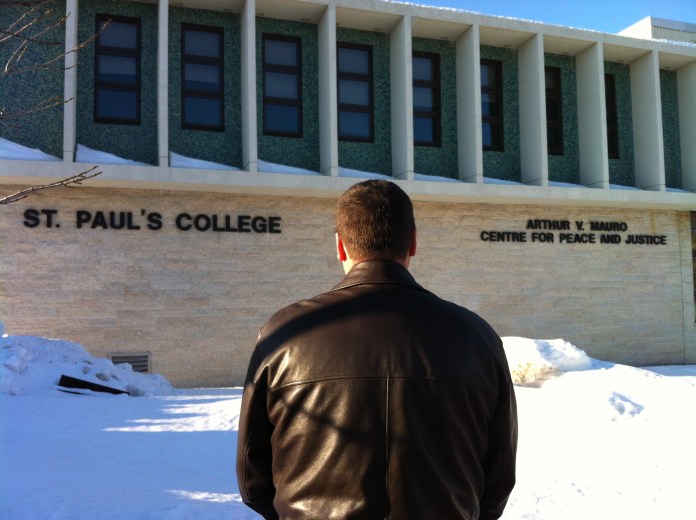
Dr. Bob Chrismas completed a Doctorate in Peace and Conflict Studies at the Arthur V. Mauro Centre for Peace and Justice at the University of Manitoba focused on interrupting sex trafficking and exploitation of Indigenous women and girls in Canada. Chrismas was awarded the University of Manitoba Distinguished Dissertation Award. With over thirty-five years of law enforcement experience in Manitoba, Chrismas started his career during Manitoba’s Aboriginal Justice Inquiry and has published widely on Justice issues in Canada.
Host Dr. Niigaan Sinclair is Anishinaabe (St. Peter’s/Little Peguis), a Winnipeg Free Press Columnist, and associate professor in the Department of Native Studies at the University of Manitoba.
Thank-you Jennifer and Laura, for adding my chapter on violence the Canada’s strong Indigenous women have contended with.


Research Journeys in/to Multiple Ways of Knowing is an interdisciplinary collection of Indigenous research and scholarship that pushes boundaries of expectation and experience. While the topics are diverse, there are many points of affinity across the issues including themes of identity, advocacy, community, rights, respect, and resistance. The authors present counter-narratives that disrupt colonial authority towards multiple ways of knowing.
Regardless of worldview or specialization, the chapters in this book have something to offer. Like the whorl of a spiral, the curve can be observed as traveling inward or outward. At different points in the conversations, the assertions may be congruent or disparate from the reader’s perspective. The discussions may resonate on individual or societal levels. While tensions may arise, the push and pull of competing constructs demonstrates that the ideas are connected and held in relationship to one another—negotiating alterity is a space of reconciliation. Together the pieces contrast, blend, and broaden the landscape of Indigenous research and decolonizing discourse.
“I hope you enjoy the critical and creative gifts here and witness and participate in the vibrancy, dynamism, and beauty of Indigenous scholarship.” – Niigaan Sinclair, Associate Professor, Department of Native Studies, University of Manitoba, from the Foreword of Research Journeys in/to Multiple Ways of Knowing.
Cover art by: Jonathan Chin. The spiral image was drawn to represent the seven sacred teachings and honours the artwork of Dr. Joane Cardinal-Schubert. The art piece was created in winter 2016, as part of a final assignment in the EDUC 530 – Indigenous Education course, within the undergraduate teacher education program in the Werklund School of Education, University of Calgary.


“Side hustle?”, I asked, as a younger work colleague mentioned hers. I learned it’s a new-age term, common among millennials. Times are tough, cost of living is high, and everyone has an extra job, a “side hustle” for extra income and, I presume, for experience and networking. I realized I’ve had multiple side hustles throughout my career, most recently volunteering on non-profit boards, and my graduate studies which have now morphed into a writing career.
Since finishing my dissertation, well actually long before, I’ve stewed about how to maximize my impact with this PhD; what social good can I do? Still in public service, now in my 30thyear of policing, I find myself fully engaged in a side career of writing and teaching, with guest lectures and courses, and a continuous cycle of research, writing, peer review, revision, and publication- all in my spare time. I guess it is the work ethic, curiosity and work habits I gained through years of grad studies, while maintaining my policing profession and doing my part at home, raising four kids. The drive has not been a problem; having quit school early and returning later in life to further my education, I’ve cherished the opportunity to work and learn, but I’ve often reflected on how much the education and publishing work helps or hinders my day job. The other bigger question is where I can get the best impact with my PhD credential and academic work. Should I move into academe or stay in the front line? I’ve come to realize that I have an academic career, as a side hustle. Should I continue my grassroots and frontline work, in policing or elsewhere, and continue pursuing academics on the side? Or should I seek a full-time professor role?
As a pracademic, a frontline practitioner with some academic skills- seeking praxis of my work- it feels fulfilling to publish and raise awareness about issues in my profession and community. My first book and all of my articles have influenced decision makers and practitioners in the far corners of the world- I know because they cite my work, and occasionally they tell me; those interactions are highly rewarding and inspiring. At the same time, I wonder where I can get the best bang for my efforts; for example, I’ve put a lot of effort into publishing in scholarly journals, but I’ve come to prefer open access journals that allow me to freely share the work and spread the word farther. Sometimes professional magazines and news pieces get much broader distribution, so they do a lot more to further my personal goals, of affecting some good by moving the public discourse on social issues; sometimes they inform decisions by difference makers in the community. So, I wonder what more I can do with this potential power of writing.
Of course, as a closet academic- I did some research on the question of whether my PhD serves the community and my work better inside or outside of academe. One of the volunteers in my office calls me “Doctor Bob Cop”, which highlights that in some people’s eyes I’ve become somewhat of a goyim (Yiddish for someone outside the community), a label I’m happy to bare because it also connotes, in my mind, breaking away from the pack with some unique accomplishments. But where best to use these new skills? My cursory research on the academic vs. practitioner role finds that the vast majority of published articles on the topic quickly move to the question of where the better jobs are. This is likely the question foremost on most people’s minds; analyzing whether pursuing the PhD or master’s degree is worth the effort- for job getting. I was in the opposite, and fortunate position of having my career already set, and doing graduate and post-graduate studies mainly for self fulfilment. But it still leaves the question of where to get the better bang for my efforts- (1) in the workforce and publishing as a side hustle, or (2) seeking to go head and heals into academic career. Some have written about the potentially stifling university bureaucracy that comes with professor jobs. The opposite side of that problem is the limited time available for research and writing while maintaining a 40 hours per week non-academic job. Some even argue that working in academe leaves little time for many, for research and writing, as teaching is highly labour and time demanding.
The other question about pursuing higher education is whether it’s worth the effort in relation to career advancement or rewards. In some professions higher education results in almost automatic advancement, or at least meets requirements for advancement. In other professions, not so much. In those cases, one must dig deep for motivation, because they are not likely to find it in the job. Some professions, like policing, are in a period of change over recent decades- so higher education is appreciated more by some than others, and achieving an advanced degree may or may not help one’s career. I’ve often said that the moment people ask me how the education helped my career- that I knew they don’t really understand it. The prospect of a promotion could not motivate me to do what I put myself through to complete the PhD. At the same time, I have to say, my education has improved my job skills on every level. More importantly it has enriched my life far beyond anything I could conceive of before I began. So, wherever my career takes me, regardless of what I am doing, I will always have my academic side hustle. How about you?

Thank-you as well to Professor Donna Hughes, University of Rhode Island, for your guidance with this article.
Acknowledgements:
I am grateful to the many participants who agree to take the time to be interviewed for this research. I thank the survivors for opening their hearts and exposing their compelling stories for the greater good of preventing people from being exploited and assisting others to escape the sex industry. I also acknowledge and appreciate the professionals, researchers, police, social workers, and NGO staff who work tirelessly for social justice. The opinions expressed in this article are my own and not the Winnipeg Police Service. Dignity thanks the following people for their time and expertise to review this article: Robert Jensen, professor emeritus, School of Journalism, University of Texas at Austin; and Joan Reid, associate professor criminology, University of South Florida at St. Petersburg. Dignity also thanks Jody Raphael, DePaul College of Law, Chicago, Illinois, for her time editing this article.


COVER: Conflict Transformation Peacebuilding and Storytelling
Conflict Transformation, Peacebuilding, and Storytelling: Research from the Mauro Centre
Chapter 1. Sharing Circles: The Benefits and Limitations in Peacebuilding Initiatives
Dr. Cathy Rocke
Chapter 2. Applying the Conflict Transformation Lens to Understand Why Indigenous Canadians Drop Out of School
Dr. Laura Reimer
Chapter 3. Peacebuilding Projects as a Conflict Transformation Tool: A Meso-level Perspective from Winnipeg
Dr. Kawser Ahmed
Chapter 4. Stories From Survivors of Canada’s Sex Industry
Dr. Bob Chrismas
Chapter 5. Hermeneutic Phenomenological Understandings of Canadian Soldiers’ Experiences in Peace Support Operations
Dr. Patlee Creary
Chapter 6. Racialized and Gendered Peacebuilding in the U.S.-Mexico Border Justice Movement
Dr. Jodi Dueck-Read
Chapter 7. The Role of Transitional Justice in Conflict Transformation and Peacebuilding in Kenya
Dr. Peter Karari
Chapter 8. Living with Others: Learning for Peace and Global Citizenship
Dr. Lloyd Kornelsen
Chapter 9. Players or Pawns? Protest, Participation, and Principled Nonviolence at the 1968 Summer Olympics
Dr. Chris Hrynkow
Chapter 10. Towards an Integrated Framework of Conflict Resolution and Transformation in Environmental Policymaking: Case Study of the North American Great Lakes Area
Dr. Olga Skarloto
Chapter 11. “You’re sitting in my desk!” Researching the ‘Past in the Present’ in Israel
Dr. Katerina Standish
Chapter 12. The Challenge of Local Ownership of Peacebuilding in Afghanistan: Dependency, Biased Coordination, and Scant Timelines
Dr. Chuck Thiessen
Reviews

I quit school to join the workforce when I was 16 years old, but always knew I would return to complete my education someway, somehow. I was always working; in fact being tired all the time may have resulted in my not finishing high school. At 16, I was delivering pizza every night for Gondola, slopping horses at the race track at six each morning, and doing odd construction jobs on weekends, so I was pretty much independent from a young age.
As a child, I thought of myself as a philsophical person, somewhat of a poet, but I wasn’t feeling fulfilled in high school. One teacher, who I liked and respected, took me aside one day and even encouraged me to leave school; I’ve always felt he let me down at that time. When my buddy Duane suggested we quit and go down West, I said OK. I finally found some work as a logger in BC, but got laid off within a few months before I came back to Winnipeg to do a variety of construction and factory jobs. Concrete work was hard. I still thank my lucky stars that I don’t do that for a living, every time I drive by a construction crew. Landscaping was OK, it is outdoors and not too dangerous, but I still recall the time my workmate got taken away by ambulance because he inhaled too much dry dirt.
One moment of truth came when I was 19 years old, working at the old Five Roses Flour Mill in Winnipeg. It was a dirty, tough job and I saw something that made me think. I saw a man, a machine tender talking to the shop stuart, it was a union shop, and he was upset. He said a young manager told him to dump a 100-pound bag of flour down a chute. I’m a machine tender, its not my job, and I have a bad back- he said. The manager said do it or go home. This man had worked there for maybe 20 years, and would have a hard time finding other work. I said to myself right then and there, I better get back to school, otherwise I’ll still be doing this dirty job when I am 50.
Looking for options, I started checking adult education and high schools for ways for me to go back. One day, I stopped in at the University of Winnipeg Collegiate. It was a different kind of place, as it was part of the University. I met a kind principal named Vanderstoel. I had a poor school record, but I felt I could possibly finish high school and who knows where that might lead. In about five minutes, Mr. Vanderstoel set me up to do my high school courses and a course in first year university as well. This sent my life on a whole new trajectory for the next seven years, finishing high school and then my bachelor’s degree. I told the management at Five Roses Flour I was quitting to go back to school and an interesting thing happened. By the end of that day they came to me and said they had talked it over and they’d created a job for me; I was to watch for fires. So, for the next year I worked two 16 hour shifts at the flour mill each weekend, studying for high school, and walking through the mill once per hour to watch for fires. In hindsight, I realized later how nice that was of them; but, they needed that fire watch as the place eventually burnt down, not on my watch, but long after I had moved on.
I took courses at the University of Winnipeg, year around while working four jobs, finishing high school. For many years I worked out at the YMCA, bodybuilding and strength training, when I wasn’t training in the martial arts. The YMCA was the only weight room in the City. From the age of 13 I used to meet my Dad there; he would go after work and I would bus down there after school and then catch a ride home. I still went there when I was 19, and one guy at the gym was a senior supervisor in the Sheriff’s Office; he hired me as a Sheriff. It was a good job for studying and great experience in the courts and prisons. I also worked other jobs, supervising federal prison inmates in a halfway house owned by the Native Clan Organization. For about a year, at one time, I was working fulltime as a Sheriff during the week, then I would report to Regina house and work from Friday evening, around the clock, to Sunday night, 40 hours, every weekend. Then in the evenings during the week I was the night manager of the Holiday Inn downtown; that was a job that evolved from when I was the bouncer in the nightclub and an opening came up to take over the security department. My wife Barb and I both worked there, and that is where we met. I was always taking courses and always studying ever chance I got.
I was a Sheriff’s Officer for five years and achieved the coveted permanent provincial appointment, which means you have benefits and cannot be laid off. However, I reached a point in 1987 where I could complete my BA if I went fulltime to school, so I made a leap and did it, giving up my provincial job; another crossroad. I was also a part-time soldier for years, with the Fort Gary Horse, and I eventually gave that up when I went into policing. I started in 1989 with the Winnipeg Police Service, after graduating with my BA. I moved up the ranks to my current position of Staff Sergeant, 29 years later. On the job training is a whole other story, after all the specializations I pursued, I had a resume 20 pages long.
Eighteen years into my policing career I started looking to further my university education. Looking at law school and various graduate programs, on the advice of one of our deputy police chiefs, I ended up in the Politics Department, at the University of Winnipeg. The chair of the Masters program (joint between the U. of Manitoba and U. of Winnipeg) in Public Administration said I might be a candidate, but why not try one course and see how it goes? She said the core theory course starts next week. I was nervous and unsure, but I made a snap decision and got re-admitted to the University of Winnipeg, and got permission to take the one course. Making that decision sent my life in an entirely different direction. I was unsure if I belonged, or if I could do it, but in the end, I loved it and did well. I took course after course and eventually was admitted to the program, finally completing it, with distinction, in 2009. Throughout my grad studies I always chose paper topics that I might apply in my policing career. They became the core of the first book I published, Canadian Policing in the 21stCentury: A frontline officer on challenges and changes (McGill-Queens University Press, 2013).
Grad studies in addition to my public service career was so rewarding and enriching that I wanted to continue it. Dr. Byrne, chair of the Peace and Conflict Studies (PACS) Program, in the Arthur V. Mauro Center for Peace and justice, was kind and advised that I may be a candidate, so why not put in an application. The PACS program is one of the few PhD programs of its kind, and is unique in Canada. After I applied, they advised that I had no background in Peace Studies, but why not join the new PACS Masters degree that was started in 2010. I already had a master’s degree, but I just wanted my learning to continue, so I jumped into it.
One of the highlights of that program was travelling across South Africa, studying truth and reconciliation. Another highlight was rolling out my book on policing, presenting on it as far away as Hong Kong. Barb and I loved doing book signings for years; and I was always taking courses. At one point, in 2012, I suggested to the University of Manitoba that I have almost completed a Masters in Peace and Conflict Studies, and therefore now have a pretty good grounding in the field, maybe my studies should be applied towards a PhD? They agreed, and I embarked on completing my PhD. My dissertation, titled Modern Day Slavery and the Sex Industry, was on a topic that I became passionate about through my police work. It was just awarded the distinguished dissertation award by the University of Manitoba. I was proud to achieve this, because even now, I often feel insecure, like I don’t belong in the University, like I tricked the system somehow and just have not been found out yet.
People often ask me how I found time to finish a PhD while working full time and  being father to four children. I most often say, half-joking, but actually not joking at all, at three in the morning, in the off times, when the kids were sleeping and when I was not required to do anything else. I always had a brief case with my coursework with me, always grabbing a minute here and there- and it all adds up. I had a lawn chair in the trunk of the car and always volunteered to drive the kids to their soccer games, basketball games, karate, swimming; a soccer game is good for two hours of reading. Of course, it was also a sacrifice for Barb, and Crystal, Chelsea, Brandi and Bobby; but my hope is that the example I tried to set, as a life-long learner, has made an impression and rubbed off on them. I believe it has, and I am proud of them all.
University is a special place for me, it has been the institution that stood behind a young man with hopes and dreams of a higher education, and all the doors it has opened for me. It changed the trajectory for a kid who quit school to work as a laborer. As a life-long learner I have always, throughout my whole adult life, felt proud and thankful for the important role that education has played for me, and the role it plays for thousands of people each year in achieving a better more fulfilling life. Now, as I have 20 academic papers, books and book chapters in various stages of publication, I can’t help but think back to the crossroads that send people here rather than there in life.
My hope is to use my story to encourage and inspire others, not so much to seek formal education, but to remain curious about the world, and keep learning. “Lifelong Learning is not a product of schooling but the lifelong attempt to acquire it” (Physicist & Nobel Laureate Albert Einstein, 1879 – 1955). Of course, my life’s journey of learning and unexpected lessons was directed in part by the strange experiences that came with 40 years in peace keeping professions, and a life dedicated to my wife and four loving children who in turn inspired and supported my educational journey.

Mom and Dad
My Dad was an educated man, a tradesman who could build anything with his hands, but he had very little formal education. Mom dedicated herself to our family. Life and learning is not about formal education; it is about being curious about the world and always asking questions. Now in my 29thyear of policing I still literally wear a blue collar at work. I am proud of it, coming from a blue-collar background, and from a blue-collar family, and so proud of my Dad for always encouraging me to do what I feel passionate about in life. On his death bed, he said “life is short, don’t take things for granted and don’t take yourself too seriously.” Words that stuck with me. My message to you is to keep learning and engaging with life, it is the journey that is most meaningful, not the destination.

…a family that loves, friends who care, and colleagues with mutual respect
…parents who taught me to be fair, kind, and to work hard for a place in the world
…to be free and have had the opportunity to seek an education
…for mentors and teachers who pay forward for the gifts they’ve been given
…for adversity in my life, because otherwise how could we appreciate overcoming it
…to live in a diverse community, with access to the best of many cultures

…to have a voice to speak, write, and leave a legacy, no matter how small
…for health, and the life I’ve had doing what I wish
…to have the opportunity to serve, family, friends and community
…to be empowered with new resources and a team to continue striving to do compassionate work int the community.


Thrilled, honoured and humbled to be nominated and selected for the:
UNIVERSITY OF MANITOBA DISTINGUISHED THESIS AWARD, to be presented this fall, and to have my thesis selected among all faculties to be nominated by the University of Manitoba for the CANADIAN DISTINGUISHED DISSERTATION AWARD by the Canadian Graduate Studies Association.


I wonder how many people know the life of a first responder, the things they are exposed to and the reality that they live with. A student in a university class on violence and conflict recently asked me, how do police officers deal with the stress of the job. I pointed out that medical staff, nurses and doctors, paramedics, fire fighters and police officers deal with people at their maddest, baddest and saddest, routinely exposed to things that are beyond the normal human experience. They see things that they don’t want to burden their family or friends with, so who do they talk to, and when do they unburden themselves?
First responders are the tip of the public service spear, first to arrive at some of society’s nastiest problems, dealing with humanity at it’s worst, they exemplify some of humankind’s best. Police and firefighters, like soldiers, must come to terms early in their career with the sacrifice they may be called upon to make at any given moment. And make no mistake, when they sign up, their spouses and families are signed up along with them. But it is important to point out that all public servants, in all their varied roles, sacrifice for their work, whether it be in public office, clerical or administrative roles, dealing with some of society’s worst problems. To me, and I think most civil servants, public service means committing to serve, putting community well-being first. First responders represent the epitome of service, literally knowing they could be called upon to make the ultimate sacrifice. But, most of their work is more of a slow burn, dealing daily with conflict, victimization and administration, two minutes of terror followed by eight hours of paperwork- as the saying goes.
They have to be stoic and professional at scenes of violence, the calm voice and steady hand for people during the worst crisis of their life––over and over again in any given tour of duty, and then never really having a chance to scream themselves; Public speaking when they are afraid, humble and uncomfortable, but the message is so important to say; Taking shit, “I pay your salary” and just smiling when people tell you their speeding ticket story; Being called a racist when you’ve dedicated your life to fighting racism; Tedious investigations and endless paperwork, so court cases don’t fail; Leaving family, no matter if it’s Christmas, an anniversary or birthday, to help other people with their crisis, managing a threat to public safety, or making sure a crime is investigated; Working and guarding the community while everyone else in the City sleeps except for criminals, drunks and cabbies; Safeguarding someone’s dignity when they are attacking yours, protecting them while they are assaulting you; Taking an eyeful of pepper spray, being tazered, and practicing self defense tactics on each other, so you know what it would feel like if you ever have to use it on a criminal; Going into a dark building to search for intruders, knowing that a colleague recently caught a two-by-four in the face in the same scenario; Intervening in a fight when a terrified person has called for help, with the memory that you recently did the same thing and while you were putting the cuffs on him, she changed her mind and attacked you from behind; Facing a crowd in protest, allowing them to spit on you, swear at and berate you, hoping you see it coming if someone throws a rock or chemicals or a malotov cocktail from the crowd, knowing you are there for their protection; The proverbial, running towards danger when everyone else is running away.
The unsung support roles are just as stressful, the nurse’s aide who cleans up all the blood and medical supplies in the emergency room, getting ready for the next emergency while a grieving family from the previous one is still in the other room, the dispatcher who listens helplessly to the high-speed pursuit, desperate citizens calling for help, the officer voicing for backup while they are being attacked, or the firefighter down in a smoke-filled building, and the list goes on.
It is the greatest honour to have such meaningful work protecting community, the opportunity to practice pure compassion for people, even if it puts you in harms way; but folks should know it is a privilege that comes with a cost. It is a calling that cannot be described well without the term love, love of humanity, love of community and gratitude for the opportunity to serve a pure purpose in life. That is the unvarnished truth for most first responders.
I’ve been nominated to represent alumni on the University of Manitoba Board of Governors. I would love the opportunity, and hope you will vote for me.
Here is my BIO:
“Throughout his 35-year public-service career, Bob has remained connected with the University of Manitoba (U-of-M), achieving his PhD in Peace and Conflict Studies in 2017, and Masters in Public Administration in 2009. Widely published, Bob’s book, Canadian Policing in the 21st Century (McGill-Queen’s Press), raised awareness around Canadian Justice issues. His PhD research amplifies the voices of survivors combatting sex slavery in Canada. Professor Sean Byrne of U-of-M, says Bob, “is an invaluable asset to Winnipeg’s peace and justice community where he is generous in sharing his pragmatic ideas regarding peace building and social change.” Bob is passionate about inspiring others’ educational fulfillment, proud of the U-of-M’s role enriching the community through research, education, and professional development. Outside of policing, Bob loves his wife and four kids, and volunteers on several non-profit Boards, working to raise awareness around social justice issues. Bob says, “I want to serve the Board of Governers to support and give back to the institution, teachers and fellow students who’ve given so much to me.”


 With Elder- Wally Chartrand


Rising Up is an academic gathering giving graduate students the spotlight to present their work while connecting with other researchers. The conference is interdisciplinary, and attracts students and researchers who are working on a wide range of topics in the Indigenous/Native Studies field.
This is a free event, open to all.

Abstract
One need not look to the Global South or conflict zones worldwide to find marginalized and oppressed communities. Canada has one of the highest living standards in the world. Yet, many of our citizens live unhoused or with unstable power, undrinkable water, and insecure food supply. In the larger urban centres people seem to have become accustomed to stepping over unhoused people who are dying in the streets, or they avoid visiting the impoverished core neighbourhoods altogether. Countless individuals suffer from mental health challenges or addictions exacerbated by poverty. Most will not act unless they cannot avoid what is occurring in their own backyard. Society would rather hide the undesirable lifestyles and way of life of the homeless, poverty-stricken, criminal, or addicted individuals by congregating them in impoverished neighbourhoods. Many feel that if these social blisters are out of site, and “not in my back yard” (NIMBY) then they are someone else’s problem. We should all feel responsible to overcome this culture of indifference and silence as NIMBYism has a high societal cost to everyone, especially in the city of Winnipeg and other Canadian cities. This chapter explores the phenomenon of inaction, denial, and how the average person is called to act on social issues in their communities. We examine the power of adding to the discourse around social responsibility to raise awareness and inspire people to make positive contributions in their communities.


Travelling occasionally, even briefly, is refreshing. Many of my most memorable experiences in life are from my travels- breaking out of the routine and appreciating how others live.
This week, Barb and I revisited Victoria BC, having been there once about eight years ago. We took a day trip out in the Salish Sea, to where it meets the open Pacific Ocean. It was a warm day but got colder as the chop grew and we hit the thermocline of the cold breeze blowing in off the open ocean. There we discovered humpback whales, sea lions, seals, and an impressive ecosystem unlike any on land.
It was nostalgic for me as we came close to where my childhood buddy, Pete, drowned on our fateful kayak adventure in that area 38 years ago. It stands out in my memory like it was yesterday, because I never felt so close to death, but equally present and alive. I had no business being out there, inexperienced in kayaking, let alone in the ocean. Pete, Duane, Tom and I were 20 feet apart and could not see each other because the swell was so high. The Broken Group Islands are a wild and beautiful place, untamed and free to visit. I got a sense of the thrill that adventure seekers chase, tempting fate by getting close to a harsh and unforgiving eco-system. It reminded me of our insignificance in the universe. To this day, I think back to experiences like that, when I feel worried about things; don’t take yourself to seriously because this is all a fleeting moment.

Screenshot


(c)ian_roberts iroberts36@gmail.com

(c)ian_roberts iroberts36@gmail.com

(c)ian_roberts iroberts36@gmail.com


 The 250-year-old Great Banyan near Kolkata spans an area of 3.5 acres and is one of the notable trees of our planet.
Screenshot


Chrismas, Robert and Brandi Schellenberg. (in peer review). “Not in My Back Yard, Not My Problem: The Effect of Social Justice Discourse in Calling to Action for Community Wellbeing” in Looking In, and Breaking In: Conflict, Peacebuilding, in Through the Outdoor of Core-Periphery Relations (Routledge Publishing).
Abstract
One need not look to the Global South or conflict zones worldwide to find marginalized and oppressed communities. Canada has one of the highest living standards in the world. Yet, many of our citizens live unhoused or with unstable power, undrinkable water, and insecure food supply. In the larger urban centres people seem to have become accustomed to stepping over unhoused people who are dying in the streets, or they avoid visiting the impoverished core neighbourhoods altogether. Countless individuals suffer from mental health challenges or addictions exacerbated by poverty. The same disparity can be seen throughout the world. Many live around these tragic social issues and do not see them as their problem unless they are directly affected by them. Most will not act unless they cannot avoid what is occurring in their own backyard. Society would rather hide the undesirable lifestyles and way of life of the homeless, poverty-stricken, criminal, or addicted individuals by congregating them in impoverished neighbourhoods. Many feel that if these social blisters are out of site, and “not in my backyard” (NIMBY) then they are someone else’s problem (Chrismas, 2020). We should all feel responsible to overcome this culture of indifference and silence as NIMBYism has a high societal cost to everyone especially in the city of Winnipeg and other Canadian cities. This chapter explores the phenomenon of inaction, denial and how the average person is called to act. We examine the power of adding to the discourse around social responsibility to raise awareness and inspire people to make positive contributions in their communities.

Chrismas, Robert (draft submitted). “Hope Rising from a Sea of Inhumanity:
Imagining a Compassionate Vision to Reality in Winnipeg’s Community Safety Team.” International Journal for Peace and Justice (inaugural edition, Mauro Institute).
Abstract:
Fostering hope in our divided world, Winnipeg’s Community Safety Team was created with a ground-breaking vision of compassionate service to those most vulnerable in society while improving public safety. Drawing on Jean Paul Lederach’s hopeful idea of the moral imagination, we contend that hope can rise from the sea of inhumanity, if we develop the empathy and the strength to carry it out. This article explores how seminal peace-keeping strategies such as sustained dialogue can empower networks to build collective peace. The paper also highlights the importance of protecting the protectors as this type of work carries a high risk of trauma for the caregivers.

I’ve made a study of our cat, West, and feel I’ve taken some valuable lessons from him.
1- He is always right in the present and where he wants to be. I’ve noticed this about cats, and have often said if reincarnation is a thing, I’ve like to come back as a cat.
2- He is playful, even as an old cat he seems to forget he is older, running around like a kitten and is always up to play. I often wonder if it is because there are no other cats around him to remind him of what old looks like.
3- He only reacts and doesn’t over-react. When I play-fight with him, he only reacts to what happens, and not to what he thinks is going to happen. If I reach toward him, he only reacts if I grab him. And if I grab him, he only reacts with the exact amount of force that I use. If I act like I am going to grab him, he doesn’t react at all. It’s a state I’ve worked toward in martial arts and tai chi. Focusing on the present and not worrying about the future or potential problems is a great lesson learned from this. It is a perfect balance.
Mindfulness and being in the present are great lessons I’ve taken from observing this cat. It reminds me to worry less about things that might happen in the future, or things that happened in the past that I cannot change.

Working in law enforcement for over 40 years, I’ve seen a lot of death, and was always aware that I might be in a position to capture a person’s dying declaration. I’ve always held that it could be a honour to be there, and ensure that a person’s last wishes are at least carried forward. I did not know this columnist, Shawna Forrester Smith, but when I read this last article she wrote, it struck me that it is not often that someone knows they are going to pass on and can write their last thoughts with time for thought and consideration. This is such a dying declaration, and I wanted to use my tiny platform to share it forward for Ms. Smith.
‘I had a wonderful life despite all the hard stuff’ Chronically ill, disabled Free Press columnist Shawna Forester Smith died last week, three months after writing thisCompass for LivingBy: Shawna Forester Smith
Posted: 4:53 PM CST Tuesday, Feb. 18, 2025
This last column I won’t ever read because if you’re reading this, it means I have left this Earth for whatever is next.
Someone I knew left a Compass for Living when she died and I thought it was brilliant, so I am stealing her idea. Thanks, JoAnn — may your memory be a blessing.
So here it is.
Shawna’s Compass for Living
Collect people, not things. Things offer fleeting happiness. Relationships are what give our lives meaning and purpose, not stuff.
Choose love. Love the shit out of your family and friends. Tell people that you love them. Show love towards strangers because we are all connected.
Choose kindness. It’s actually less effort to be kind than it is to be an asshole. Perform acts of kindness every day. They don’t have to be big or expensive. It can be as simple as giving a hug or listening to someone.
You’re never too old for a stuffy. This I was told by a wise beyond her years nine-year-old who died far too young.
Don’t be afraid to do things because of the word ‘no.’ Because what if they say yes?
There’s no such thing as too much education or wasted learning.
You can have more than one soulmate.
Family is also the people we choose.
Every stranger has the potential to be a friend.
Help people if you can — it’s the right thing to do. Help as many people as you can. Help your family and friends and help strangers, too. You will rarely regret helping someone.
The best gift you can give someone is your time.
Visit the sick, elderly and isolated people who you know. Visit them often. It means more than you will ever know.
Write people letters and send people cards. It’s a delight to get fun mail.
Be grateful. Be gracious. Remember to say miigwetch.
Leave the judgment to the Creator. Try not to judge others — we don’t walk their path.
We get out of life what we put into it. If you want love, love others. If you want to be treated with respect, respect others. It’s pretty simple really.
We’re all creative. Find your outlet. Creating is medicine.
It’s not so much what happens to us that matters in life, it’s how we react to what happens to us that really matters. That is what weave control over.
It’s never too late to forgive or ask for forgiveness. Don’t leave the Earth with unfinished business. Make right the wrongs.
Find your person. The person who gets you better than anyone else. The person you feel safe with and trust. The person who you can bare your soul to. The person who loves you warts and all. The person who will always be there for you. We all need a person like that.
I had a really good life despite it being really hard. I loved so many people and I was loved by so many people. I fell in love and remained in love with my husband, Brent, for over 20 years. I also found my “person.” I had the love of not one, but four families because of adoption, finding my birth families and marriage. I had a huge chosen family. There are so many people who called me their daughter, their sister and their auntie who I didn’t share blood with.
There are a lot of people who called me their bestie. I had more than one-person I considered a kindred spirit.
I made connections with so many caregivers over the years. People who shared laughter and tears with me. People who worried about me. Some of them told me their secrets and asked me for advice.
I have so much love and gratitude for all the caregivers who looked after me on my journey. Without them, I would have been dead years ago. They gave me the gift of time. And what a wonderful gift that was.
I’d like to thank all of you for being there, too. So many people have reached out to me to tell me how much my writing meant to them and what an impact it made. People also honoured me by sharing their stories and struggles. It truly was an honour.
I was inundated with cards, letters, emails, phone calls, messages on social media, gifts, homemade gifts, flowers and even people surprising me becoming in person to see me. I made friends because of the column. People asked if they could visit me.
Never in a million years when I started this column in February 2024, did I expect any of this. I didn’t plan on writing that much about me. My plan was to write about health-care issues. The paper initially didn’t commit to anything either.
Writing about my life was a surprise but those were the columns you readers seemed to enjoy the most. And I really enjoyed writing them. Chimiigwetch for all the love and support you gave me. It was a great gift.
I also want to thank the Free Press. Editor Paul Samyn took a chance on me. I made sure to thank him for that.
My fearless editor, Scott Gibbons, was a pleasure to work with. He had the gift of being able to edit my writing without distorting my voice. That is not something that every editor can do. He always understood the importance of what I was doing.
I was allowed to write about whatever I wanted. That’s pretty much every columnist’s dream job. They helped make a lifelong dream come true from. It never felt like work. I enjoyed writing every word. I also enjoyed writing back to everyone who wrote to me.
I’ll end this by reminding you the most important thing in life is the people we choose to share it with. You can never have too many people. Strangers are just people we aren’t friends with yet. Don’t get so preoccupied with living life that your relationships suffer.
Make time for the people in your life. Don’t put off spending time with your family and friends. The laundry will still be there.
Make sure your people know how much you love them. If you put love into the universe, you will be showered with love in return. And isn’t that wonderful.
Life is hard, but life is also amazing. I’d do it all over again in a heartbeat. I’d appreciate fewer health conditions if I had a second kick at the can, but I had a wonderful life despite all the hard stuff. The good stuff made it worth it.
If there’s a newspaper in the afterlife, hopefully they will let me write for it. I won’t let fear of ‘no’ stop me from asking this time. Because what if they say yes?
It has been 15 years since publication of my first book. Over the years it has been a prodigious journey of developing my voice, expanding my reach, and, hopefully increasing my influence to do social good through my writing and speaking from the heart. I’ve stayed committed to speak truth to power, doing my utmost to retain the courage and humility to overlook the occasional pushback that I’ve felt from my writing, in my life and career. I’ve strived to always do the right thing and tell the truth, regardless of where the chips fall. That first book on policing brought me to the Prime Minister’s Office and a book signing in Centre Block of Canada’s parliament, and as far as Hong Kong talking about my views on Canadian Policing. I’ve now published over sixty articles, book chapters, and six books, each with a specific message and purpose. Every piece has been a different journey. I am eternally grateful to the people who have empowered me through encouragement and inspiration, and by allowing me the education, training, and platforms to continue developing my voice. It has been remarkable to eventually feel I could call myself an ‘author’ and receive the royalty cheques from my books. I’ve been reflecting more of late, on why I write, and it certainly has never been for money. I recently spent $4,000 to purchase copies of my books, so I could give them out and make them more accessible to the people I feel need the message that each manuscript intends. So, I met today with the Executive Branch, Writing Division of my Corporation, Bob Chrismas Consulting Inc. (Barb and I  ) and decided that all proceeds from my writing from today onward, will be given to charity. This year’s proceeds will go to Cancer Care and Research, as this scourge has claimed several friends and loved ones in my life. Thank-you ALL for reading my stuff; Bob C- Writing for Social Change.

Wonderful book launch event for Devon Clunis’ memoir, and honoured to say a few words.

Screenshot

Stepping into a new year, I’ve reflected on my failings and successes in the last, feeling a renewed sense of purpose and resolve, striving to stay the course, embrace the obstacles that life offers up, and keep my eye on the horizon. Placing one foot in front of the other, my goal, both long and short, has been to contribute something useful in society, and to those around me. My hope and plan are the same in 2025, perhaps with a renewed sense of determination as I’ve had a deepening wisdom with age, that our time is limited, so we better get on with it.
Some famous words of George Bernard Shaw resonate more and more with me; “This is the true joy in life, being used for a purpose recognized by yourself as a mighty one. Being a force of nature instead of a feverish, selfish little clod of ailments and grievances, complaining that the world will not devote itself to making you happy. I am of the opinion that my life belongs to the whole community and as long as I live, it is my privilege to do for it what I can. I want to be thoroughly used up when I die, for the harder I work, the more I live. I rejoice in life for its own sake. Life is no brief candle to me. It is a sort of splendid torch which I have got hold of for the moment and I want to make it burn as brightly as possible before handing it on to future generations” (George Bernard Shaw, 1856 – 1950).
CTV interview on heading into 2025.

My note to City Leaders:
Good morning and happy new year. Reflecting on the past year, I’ve been astounded at how much we’ve accomplished with our new Community Safety Team. Starting with a blank page, a concept and vision, a new and important piece of the public safety net is now catching and supporting people who once fell through the cracks. The CST was willed into existence, a truly pioneering innovation conceived by a forward-thinking Mayor and created by a powerful will within a strong public service filled with people who were willing to use the tools we’ve all been given to make the right things happen for our community. It could not have happened without the flexibility of every civil servant, from finance to labour relations, legal and human resources, communications and IT, executive leadership and more. These things don’t happen in a vacuum, they affect everyone one of us and we change with the environment we work in. In the 6th century BC, Heraclitus said, “No man ever steps in the same river twice. For it’s not the same river, and he’s not the same man.” Change is the only constant in life, and we are all affected as we co-create and continually improve society, together. This team started with a leap of faith, by the leaders who envisioned it and by the people who became it. Every member was asked to leave the life and career they had built behind them and start on a new journey within two weeks in a brand-new team that was being built on the fly. Partner agencies inside and outside the public service looked on, many with optimism for the future we can envision together; a more inclusive society in which every citizen has a level of dignity and self-worth. Police officers, firefighters and paramedics, core service providers and so many non-government service providers have been in this trench for a long time. But the environment changes, needs and social problems evolve, so this Safety Team has strived to fill the gaps. Together we will all continue to build a net to ensure no-one is left behind. “Change will not come if we wait for some other person or some other time. We are the ones we’ve been waiting for. We are the change that we seek.” (Barack Obama). I am optimistic about the future, and what we will all accomplish together for our city and our citizens in 2025. I wish you all health and fulfillment as we continue on this journey into the future, together.


